Proprioception in Montessori: How Kids Learn Through Movement
Sep 08, 2022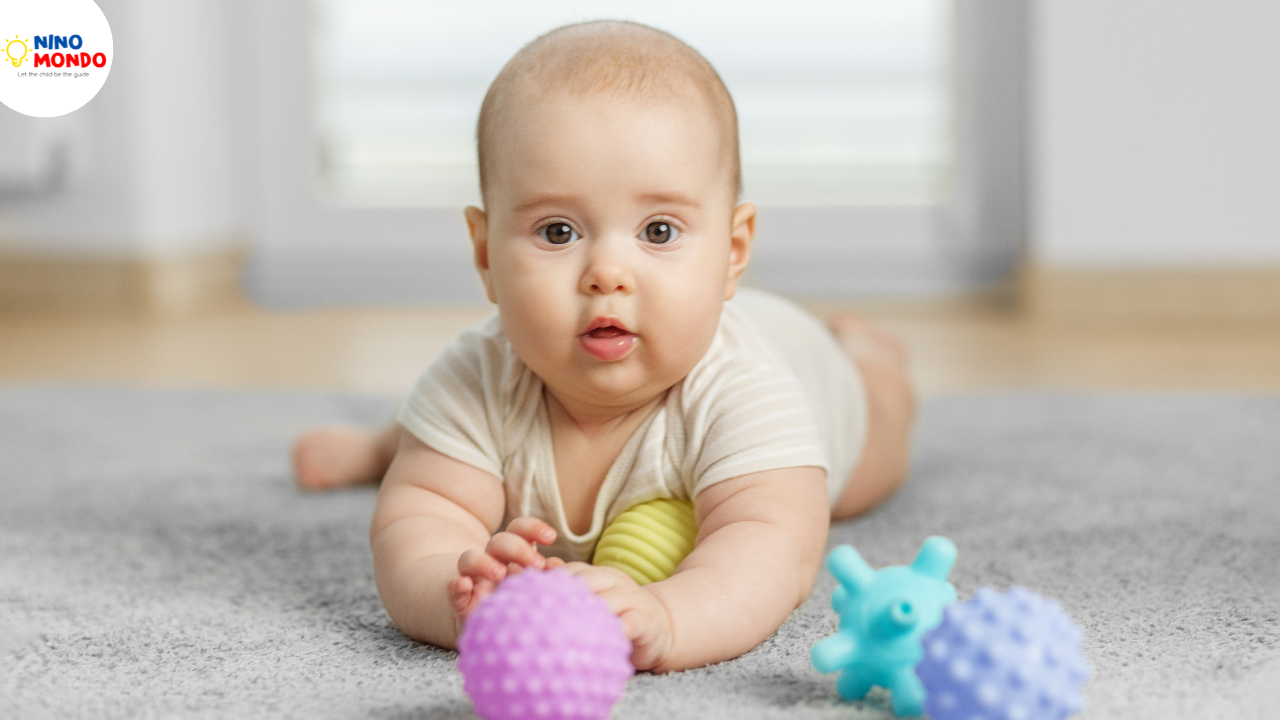
From the very first wiggles and tummy-time lifts, your child is discovering how their body moves through space—this is the beautiful work of proprioception.
Proprioception, otherwise known as kinesthesia, is the body’s ability to sense movement, action, and location. It’s the internal sense that tells them where their hand is without looking, how hard they should grip a toy, or when their foot is about to land.
In a Montessori-inspired environment, supporting this sense isn’t just helpful, but essential. Because when children know their bodies, they explore confidently, play joyfully, and learn deeply.
What is proprioception?
Simply put it is the body’s ability to sense itself and its parts in relation to each other. It helps us to co-ordinate movement. It is a mysterious sense since we are largely unaware of it in our daily activities.
Without proprioception, you wouldn’t be able to move without thinking about your next step. Proprioception allows you to walk without consciously thinking about where to place your foot next. It lets you touch your elbow with your eyes closed or type without looking at the keys.
Proprioception is developed in the womb and results from sensory receptors in your nervous system and body. Most of these receptors are in muscles, joints, and tendons.
Proprioception and Montessori
When babies are kicking, crawling, learning to walk, pushing against the floor … all these activities are developing and refining their proprioception.
In the world of Maria Montessori, the environment is arranged to allow children to move freely, choose their own paths, and refine those movements through repetition and purpose. When a child pours water, sweeps a little floor, carries a tray or balances on a low beam, they’re not “just” doing chores, but honing proprioceptive awareness.
Movement helps babies to create a mental map of their body. So when your baby finds his/her toes and takes them to their mouth... that’s proprioception at work. A little baby learning to lift their head, trying to hold it still, or trying to position to its hands or pushing against the floor, are all development of the proprioception sense.
Movement refines and develops proprioception. Everything your baby touches, sees, feels, hears and every movement is a sensory exploration to fill their environment with sensorial joy.
Over time, proprioception helps develop better hand-eye coordination, calmer self-regulation, stronger concentration, and more comfortable transitions between tasks.
Activities to develop proprioception in your baby
1. Tummy time on different textures
Place your baby on a soft mat, a woven blanket, or a firm mattress. Each surface gives different pressure feedback to their muscles and joints—a core part of proprioception.
2. Gentle baby massage
Slow strokes on their arms, legs, feet, and back help babies understand where their body begins and ends. It strengthens body awareness and calms their nervous system.
3. Supported sitting with reaching toys
Offer a lightweight rattle or grasping toy slightly out of reach. Reaching, leaning, and adjusting posture build joint awareness and coordinated movement.
4. Soft pulling activities
Give your baby a soft scarf or fabric strip to pull toward them. The gentle resistance strengthens muscles and teaches how much force to use.
5. Rolling games
Encourage rolling from tummy to back using a toy or your voice as motivation. Rolling provides deep pressure input through shoulders, hips, and core.
6. Low obstacle exploration
Let babies crawl over pillows, rolled blankets, or soft wedges. The shifting of weight, climbing, and balancing are fantastic proprioceptive workouts.
7. Water play in a small tub
Supervised splashing, kicking, and pushing water offer gentle resistance and strengthen proprioceptive feedback.
8. Push-and-pull toys (for older babies)
Light push carts, pull toys, or even a small cardboard box help babies experiment with force, direction, and resistance.
Bonus: Carrying your baby in a sling or carrier gives continuous movement and deep pressure input, helping them feel secure while developing spatial awareness.
FAQ
1. What is the most important thing to know about Proprioception?
It is responsible for body awareness, coordination, posture, self-regulation, concentration and speech.
2. Can proprioception be improved?
Yes, it can be improved through certain exercises.
3. Is Proprioception also called the sixth Sense?
Yes, it is also known as the sixth sense because it is equally important like the other five senses and works even if the person is unaware of it.
Don't miss a beat!
New moves, motivation, and classes delivered to your inbox.
We hate SPAM. We will never sell your information, for any reason.